Ecommerce Website Development Company in India

Webindia Master is an ecommerce website development company in India, operating from Delhi NCR since 2009. We build online stores and marketplaces on Shopify Plus, WooCommerce, Adobe Commerce (Magento) and custom headless stacks (Next.js and Node.js), and connect them to payment gateways, delivery partners, SAP, and custom dashboards for online stores.
Each build targets Google’s Core Web Vitals thresholds (LCP 2.5 seconds or less, INP 200 milliseconds or less, CLS 0.1 or less), keeps card data off your servers through tokenised checkout, and uses signed webhooks so payment, shipping and inventory states stay in sync.
- Platform selection based on catalogue size, B2B needs and integration depth
- India-ready checkout: UPI, cards, net banking, wallets, COD and GST invoices
- Order, shipping and inventory sync through Shiprocket, Delhivery and Unicommerce
- Mobile-first storefronts measured on real-user field data
- Post-launch maintenance: security patches, monitoring and release support
Client Spotlight











We Build Ecommerce Platforms On Shopify, Adobe Commerce and Custom
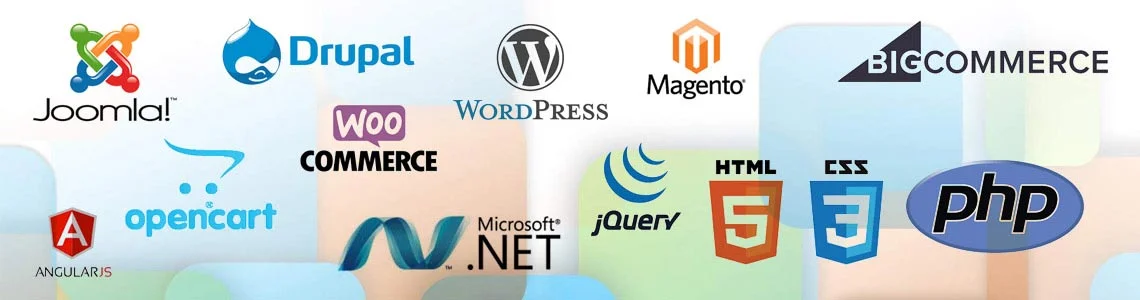
We build on four stacks: Shopify (hosted SaaS), WooCommerce (WordPress, self-hosted), Adobe Commerce, formerly Magento (self-hosted or Adobe-managed cloud) and custom using Laravel and PHP, and headless storefronts using Next.js with Node.js services. Platform choice depends on catalogue size, B2B requirements, integration depth and how much infrastructure your team wants to manage.
| Factor | Shopify | WooCommerce | Adobe Commerce (Magento) | Custom headless (Next.js + Node.js) |
|---|---|---|---|---|
| Hosting model | Shopify-managed SaaS | Self-hosted WordPress on managed hosting or a cloud VPS | Self-hosted, or Adobe Commerce on cloud infrastructure | Your cloud (for example AWS Mumbai, ap-south-1) behind a CDN |
| Best fit | D2C and multi-channel brands that need a fast launch | Content-led stores with small to mid-size catalogues | Large catalogues and complex B2B or multi-store rules | Unique storefront UX, multi-brand or multi-region stores, custom workflows |
| Scalability | Platform-managed scaling for traffic spikes; checkout runs on Shopify infrastructure | Scales with hosting, object caching and plugin discipline; heavy plugin stacks limit throughput | Horizontal scaling with Redis, Varnish and OpenSearch; built for large catalogues | Scales per service; edge rendering and caching under your control |
| Customisation depth | Liquid themes, apps, Shopify Functions, checkout extensibility | Plugins, hooks and custom PHP | Module system in PHP with full control of business logic | Unrestricted; you own every layer |
| B2B features | Company accounts, catalogs and payment terms | Through extensions | Native B2B: company accounts, shared catalogues, quotes, requisition lists | Built to specification |
| Multi-vendor marketplace | Marketplace apps or custom build | Dokan or WCFM plugins | Marketplace extensions or custom modules | Custom, with split settlements through Razorpay Route or Cashfree Easy Split |
| India payments | Third-party gateways such as Razorpay, Cashfree and PayU through payment provider apps | Gateway plugins for Razorpay, Cashfree and Stripe | Gateway extensions or direct API | Direct API integration with hosted checkout fields |
| Checkout control | Checkout extensibility on Plus | Full control | Full control | Full control, with PCI scope kept low through hosted fields |
| Upgrades and maintenance | Platform upgrades handled by Shopify; we review app updates | We handle core, theme and plugin updates | We plan and test security patches and version upgrades | We own dependency updates, CI/CD and monitoring |
| Core Web Vitals starting point | Strong defaults; third-party app scripts are the main INP risk | Depends on hosting, theme and plugin count | Needs a performance-focused frontend such as Hyvä or a headless storefront | Best control through server-side rendering and incremental static regeneration |
| Launch speed | Fastest | Fast | Slower | Slowest |
How we choose between them:
- Shopifywhen launch speed, multi-channel selling and low infrastructure overhead matter most.
- WooCommerce when editorial content and organic search drive sales and the catalogue is moderate.
- Adobe Commerce when ERP-driven B2B rules, large catalogues or multi-store setups are required.
- Headless when storefront experience, multi-region delivery or tight performance control justify the extra moving parts.
We also maintain and migrate existing OpenCart and PrestaShop stores.
Platform pages:
Ecommerce Development Services
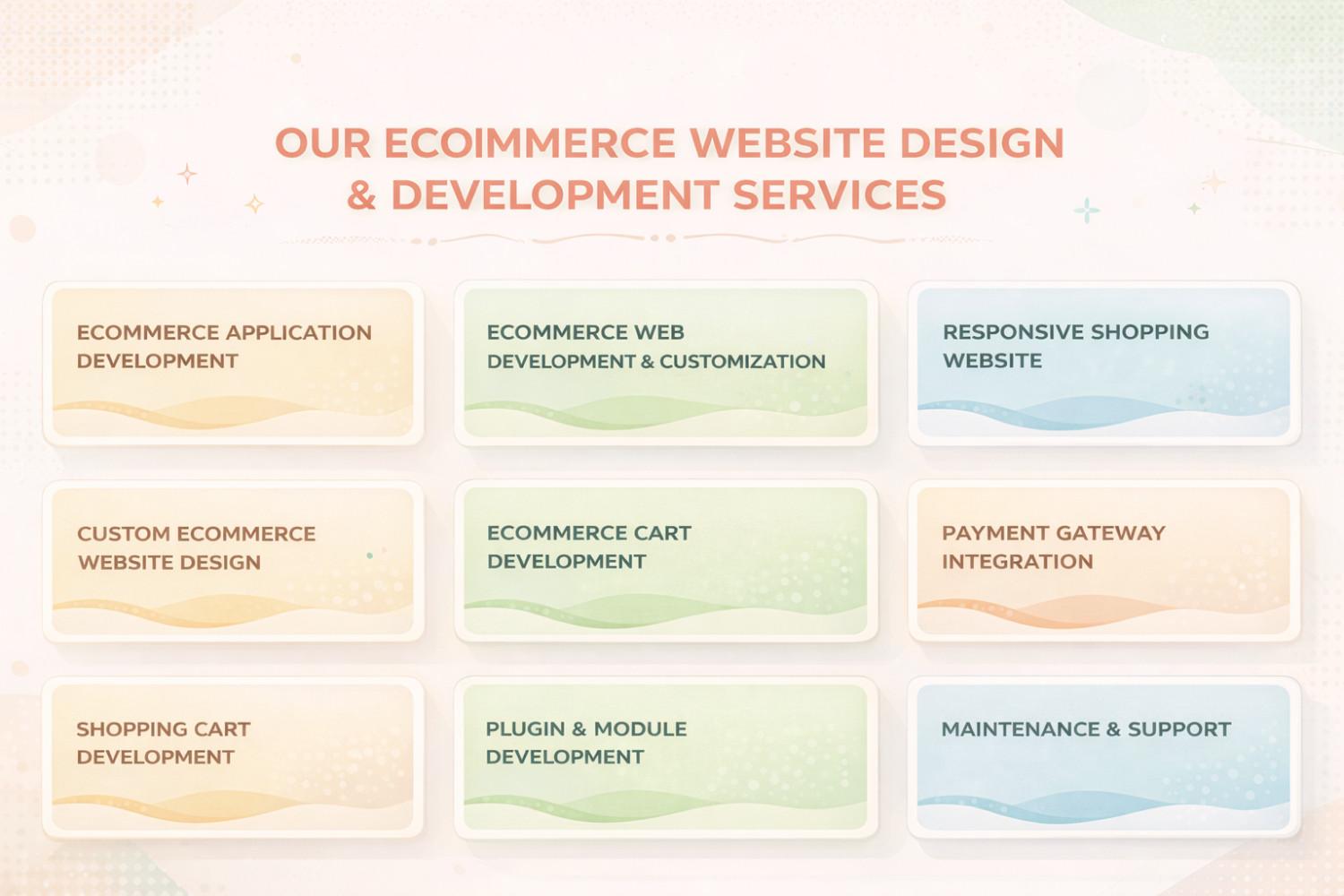
Webindia Master delivers custom ecommerce websites, B2B portals, B2C stores, multi-vendor marketplaces, platform migrations, third-party integrations and post-launch maintenance. Each engagement starts with an audit of catalogue size, traffic, payment methods and logistics partners, then maps to one of three delivery tiers: D2C Startup, Mid-Market B2B or Multi-Vendor, and Enterprise Custom.
Custom ecommerce website development
Custom builds give you control of layout, checkout flow, catalogue structure and integrations instead of working around template limits. We design the storefront, product data model and admin around your catalogue, then implement cart, checkout, search and filtering on your chosen platform. See our custom website design services.
B2B ecommerce portals
B2B stores need account-based buying: GSTIN capture, customer-specific catalogues, bulk order entry by CSV upload, quote requests, approval workflows and payment-term handling. We build these on Adobe Commerce B2B, Shopify Plus B2B or custom headless stacks, and sync accounts and orders with SAP or TallyPrime.
B2C ecommerce stores
B2C stores prioritise fast category and product pages, UPI-first checkout, saved addresses, order tracking and returns. We build them for mobile-first traffic and connect Shiprocket or Delhivery for pincode serviceability and shipment tracking.
Multi-vendor marketplaces
Marketplaces add vendor onboarding with KYC, catalogue approval, commission rules, per-vendor order splitting and payouts. We implement split settlements with Razorpay Route or Cashfree Easy Split, plus vendor dashboards for orders, inventory and payout status.
Platform migration and upgrades
We migrate stores from Magento 1, OpenCart, PrestaShop, and older WooCommerce setups to Shopify Plus, Adobe Commerce, or WooCommerce. Migration covers products, customers and orders, a 301 redirect map for URL parity, and a staging crawl comparison before launch.
Maintenance and support
After launch, we apply security patches, update plugins and extensions, monitor uptime and Core Web Vitals, and handle bug fixes and feature releases. See our website maintenance services.
Custom Ecommerce Website Development
We build your store from the first call to the day after launch, and we build every part so they work together as one system.
We begin by understanding how you actually sell, ship and handle COD, because the admin panel has to fit your team and not the other way round. Then we check your catalogue, products, variants and attributes, so the structure is right before design starts.
Our designers make everything mobile-first and show you a clickable prototype, so you can approve how the store looks and feels before development begins.
Your customers get a clean storefront with smart search, filters, variants, wishlist, reviews and related products. They can create accounts, save addresses, reorder in one tap and log in with a mobile OTP or email. We also add a pincode check on the product page, so they know about delivery before they order.
The admin panel is built around how your team works, with separate access for owner, manager, support and warehouse, plus a log of who changed what. Your team can upload products in bulk, manage stock and low-stock alerts, handle orders, returns and refunds, and run coupons and offers without needing a developer.
For checkout, we connect Razorpay, Cashfree or Stripe, so customers can pay by UPI, card, net banking, wallet, EMI or COD. Card details go straight to the gateway and never sit on your server, and GST invoices are ready from day one.
We build a custom Shiprocket plugin, so once an order is paid, the shipment, courier, AWB and label are created automatically. Every update from the delivery partner, including failed deliveries, returns and COD remittance, comes back to the same order on your website. We connect Delhivery the same way.
Abandoned carts are followed up with a WhatsApp and email reminder with a link back to the saved cart, and it stops by itself once the order is paid. Customers also get order updates on WhatsApp and email at every step, along with back-in-stock alerts and a review request after delivery.
We create different dashboards as per your need, and also combine them, so upper management can view or present sales, marketing, Google, stock and finance data all in one place. Before we build, we ask which three numbers you check first every morning, and those go at the top.
We connect your store with the tools you already use, such as payment gateways, Shiprocket, Delhivery, Unicommerce, TallyPrime, SAP, GA4, Meta and WhatsApp. If a tool has an API but no ready connector, we build one, and we add logging and retries so a failed call never loses an order.
SEO starts the moment we start building. URLs, breadcrumbs, schema, sitemap and redirects are planned while we design your categories, and Google Analytics, Search Console and Merchant Center are live before launch.
Your customers can add the store to their phone’s home screen with your own icon and open it like an app, and we tune the site for mobile speed because most of your shoppers will be on a phone.
The team takes care of security with SSL, a firewall, CDN, regular backups and two-factor login for admins. Before go-live we test payments in sandbox mode, retry webhooks on purpose, trigger every message, and check the store on real phones and browsers.
After launch, we train your team on the admin and leave written guides. You also get support for updates, security patches, backups and monitoring, with quick fixes when something breaks, so the store keeps running without you having to watch it.
India and Global Ecosystem Integrations
Our stores integrate Razorpay, Cashfree and Stripe, and other payment gateways; Shiprocket and Delhivery for shipping; Unicommerce for order and inventory management; software for ERP and accounting; and ONDC for open-network selling. Each integration uses authenticated server-side API calls, signed webhooks and idempotent order handling, so retries never create duplicate orders.
| Category | Systems | What we implement | Mechanism |
|---|---|---|---|
| Payments (India) | Razorpay, Cashfree | UPI, cards, net banking, wallets, EMI options, COD handling, refunds, split settlements for marketplaces | Server-side order creation, hosted or tokenised checkout, signed webhooks (HMAC-SHA256), reconciliation job |
| Payments (international) | Stripe, PayPal | Multi-currency card payments, refunds, dispute handling | PaymentIntents, webhook signature verification, idempotency keys |
| Shipping and logistics | Shiprocket, Delhivery | Pincode serviceability at checkout, shipment and AWB creation, label printing, tracking updates, NDR and RTO statuses | Token-authenticated server calls; tracking webhooks update order status |
| Order and inventory management | Unicommerce | Multi-channel inventory sync, order push, returns and exchanges | Queue-based sync with retry and backoff; SKU master mapping |
| ERP and accounting | SAP (Business One, S/4HANA), TallyPrime | Item masters, stock levels, customer accounts, sales invoices and vouchers with GSTIN and HSN codes | Scheduled and event-driven sync through SAP APIs or TallyPrime’s XML interface; e-invoice (IRN) generated by the ERP or GST software where applicable |
| Open commerce | ONDC | Catalogue publishing, order lifecycle, status updates and cancellations | Seller App (BPP) integration over the Beckn protocol with signed requests, or an ONDC-integrated seller network participant |
| Analytics | Google Analytics 4 | Purchase, refund and checkout-step events | Server-side event forwarding with deduplicated transaction IDs |
Workflow: confirming a payment
- The storefront asks the server to create an order (amount, currency, cart ID) with Razorpay, Cashfree or Stripe.
- The customer pays in the provider’s hosted or tokenised checkout, so card data never reaches your server.
- The provider sends a signed webhook, for example payment.captured on Razorpay or payment_intent.succeeded on Stripe.
- Our endpoint verifies the HMAC-SHA256 signature on the raw request body and rejects any mismatch.
- The event ID is checked against a table with a unique constraint, so duplicate deliveries return HTTP 200 without a second order.
- The order moves to paid, stock is reserved, and a job pushes the order to Shiprocket or Delhivery and to Unicommerce, SAP or TallyPrime.
- A nightly reconciliation compares provider settlements with store orders and flags any difference.
Workflow: shipping and tracking
- At checkout, the system checks the delivery pincode against Shiprocket or Delhivery serviceability and shows the available options.
- After payment, the server creates the shipment and waybill (AWB) and stores the label.
- Courier events arrive by webhook or scheduled polling and update the order status: picked up, in transit, out for delivery, delivered, NDR, or RTO.
- Customers receive tracking links, and the system records COD remittances and returns against the order.
ONDC: selling on the open network
ONDC is an open network built on the Beckn protocol, where buyer apps (BAP), seller apps (BPP) and a gateway exchange standard API calls such as search, select, init, confirm, status and cancel. Your store joins as a seller either through a Seller App (BPP) integration built into your platform or through an ONDC-integrated seller network participant. We choose the route from your catalogue size and order volume, map your product data to the ONDC catalogue format and test against ONDC’s staging environment before going live.
Performance Engineering: Core Web Vitals, PWA and Headless Architecture
Google rates a page “good” when, at the 75th percentile of real mobile visits, Largest Contentful Paint (LCP) is 2.5 seconds or less, Interaction to Next Paint (INP) is 200 milliseconds or less and Cumulative Layout Shift (CLS) is 0.1 or less. We engineer every storefront against these thresholds and verify them with field data.
| Metric | Good threshold (75th percentile, mobile) | What we engineer | How we verify |
|---|---|---|---|
| LCP | 2.5 s or less | Preloaded hero image, AVIF or WebP with responsive srcset, CDN delivery, server-side rendering or incremental static regeneration for category and product pages, self-hosted fonts | PageSpeed Insights field data and the Search Console Core Web Vitals report |
| INP | 200 ms or less | Split long JavaScript tasks, defer chat, tag manager and review widgets, hydrate only interactive components, debounce filters and search | CrUX field data and the web-vitals library reporting to GA4 |
| CLS | 0.1 or less | Reserved image and banner dimensions, font-display settings, no late-injected banners above content | Lighthouse in CI plus field data |
Progressive Web Apps (PWA)
A PWA adds a web app manifest and a service worker, so the store is installable, caches the app shell and recently viewed catalogue pages for unstable mobile networks, and can send web push notifications for order updates. We add PWA capabilities to headless storefronts, and to standard themes where repeat-purchase behaviour justifies them.
Headless architecture
In a headless build, a Next.js storefront calls a commerce backend through APIs: the Shopify Storefront API, Adobe Commerce GraphQL, or custom Node.js services. Pages are rendered on the server or pre-built and cached at the CDN edge, so category and product pages reach the browser quickly. Headless suits custom storefront experiences, several storefronts on one catalogue, and strict LCP and INP targets. The trade-off is more services to monitor and upgrade, which our maintenance plans cover.
Security and Compliance: RBI Tokenisation and DPDP Act
| Standard or control | Scope | How we build to it |
|---|---|---|
| Transport and session security | Data in transit | TLS 1.2 or higher, HSTS, Secure and HttpOnly cookies |
| OWASP Top 10 | Application vulnerabilities | Input validation, parameterised queries, CSRF protection, dependency scanning, rate limiting on login and checkout |
| Access control | Admin and API access | Role-based access, two-factor authentication for admin users, API keys in a secrets manager, audit logs |
| Digital Personal Data Protection Act, 2023 | Personal data of customers in India | Consent notices, collection limited to stated purposes, workflows for access, correction and erasure requests, retention rules |
| GST | Tax compliance | GSTIN capture for B2B orders, HSN codes on products, tax-wise invoices, invoice export to TallyPrime or SAP |
| Backups and recovery | Availability | Scheduled encrypted backups with tested restores |
Project Tiers: D2C Startup, Mid-Market and Enterprise Custom
We scope ecommerce projects in three tiers. D2C Startup uses Shopify or WooCommerce and typically launches in 2 to 8 weeks. Mid-Market B2B or Multi-Vendor uses Adobe Commerce, Shopify Plus or WooCommerce with custom modules in phased releases. Enterprise Custom uses headless Next.js and Node.js with ERP, warehouse and ONDC integrations on a phased roadmap.
| Tier | Typical profile | Recommended stack | Core integrations | Architecture and performance | Delivery |
|---|---|---|---|---|---|
| D2C Startup | New or growing brand, one catalogue, one region | Shopify or WooCommerce | Razorpay or Cashfree, Shiprocket, GA4 | Optimised theme, CDN, Core Web Vitals checked on mobile | Typically 2 to 8 weeks |
| Mid-Market B2B or Multi-Vendor | Established seller with a larger catalogue, B2B accounts or several vendors | Adobe Commerce, Shopify Plus or WooCommerce with custom modules | Razorpay Route or Cashfree Easy Split, Delhivery, Unicommerce, TallyPrime or SAP | OpenSearch or Elasticsearch catalogue search, caching layers, queue-based sync | Phased releases: marketplace or B2B core first, then integrations |
| Enterprise Custom | Multi-brand, multi-region or high-volume stores with custom workflows | Headless Next.js with Node.js services, or Adobe Commerce | SAP, Unicommerce, Stripe, Razorpay, ONDC, warehouse systems | Server-side rendering, CDN edge caching, PWA, CI/CD, real-user monitoring | Phased roadmap agreed after discovery |
Scope and timeline are confirmed after a discovery call. Give us Call Now.
Our Ecommerce Development Process
Every project runs five stages: discovery and catalogue audit, architecture and UX design, build and integration in a staging environment, testing against payment sandboxes and Core Web Vitals, and launch with monitoring. The test mode of your chosen gateway (Razorpay, Cashfree or Stripe) is used for every payment flow before any live transaction.
| Stage | What happens | Deliverables |
|---|---|---|
| 1. Discovery | We review your catalogue, traffic, current platform, payment methods, logistics partners, ERP and compliance needs | Requirements document, platform recommendation, integration list |
| 2. Architecture and design | We choose the platform and data model, design category, product, cart and checkout UX, and plan URL and SEO structure | Wireframes, design system, URL map, integration diagram |
| 3. Build and integration | We build the storefront, admin, payments, shipping, ERP and ONDC connections in staging | Working staging site, webhook endpoints, API documentation |
| 4. Testing | We test payment sandboxes, webhook retries, tax and invoice output, devices and browsers, and Core Web Vitals | Test report and performance report |
| 5. Launch and support | We handle DNS and redirect cut-over, monitoring, post-launch fixes and the maintenance plan | Go-live checklist, monitoring dashboards |
Ecommerce SEO Built into the Build
Technical ecommerce SEO is built during development: crawlable category and product URLs, canonical tags for filtered pages, Product and BreadcrumbList structured data, XML sitemaps, 301 redirect maps for migrations and Core Web Vitals targets. Ongoing keyword research and content work is delivered separately through our ecommerce SEO service.
- Faceted navigation rules that decide which filter pages are indexable and which carry canonical or noindex tags
- Product, Offer and BreadcrumbList schema generated from catalogue data, with review markup only where reviews are genuine and visible on the page
- Google Merchant Center product feeds built from the same catalogue data
- Redirect maps, staging crawls and Search Console monitoring for every migration
For growth after launch, see our ecommerce SEO services, ecommerce SEO packages and PPC services.
Clients and Project Experience
Webindia Master has delivered web projects since 2009 for brands including Yamaha, P&G, Orient Electric, Microtek, Casio India Shop, Honda India Power, Tefal and Bajaj Group. The work spans B2C stores, B2B portals and corporate sites in consumer electronics, jewellery, fashion and industrial products, for clients in India and overseas.
Start Your Ecommerce Project
Send Webindia Master your catalogue size, current platform, preferred payment gateway (Razorpay, Cashfree or Stripe), logistics partner (Shiprocket or Delhivery), ERP (SAP or TallyPrime) and target markets. We reply with a platform recommendation and a phased scope for a D2C, mid-market or enterprise build. Get a Quote.
















frequently asked questions
Ecommerce website development services cover designing, building and optimising online stores where businesses sell products or services. They include UI/UX design, payment gateway integration, product management systems and performance optimisation, so shoppers get a smooth buying experience.
A professionally built store gives you a strong online presence, lets you reach customers anywhere, and helps you grow sales as online shopping continues to expand. A well-optimised store lets you tap into a large digital audience and scale efficiently.
We work with Shopify, WooCommerce, Magento, OpenCart, PrestaShop and custom-built solutions, including React-based builds. The right choice depends on your business requirements, scalability needs and long-term growth strategy.
Yes. We build fully customised stores tailored to your brand, target audience and business goals. A custom solution gives you more flexibility, scalability and a more distinctive user experience than a pre-built template.
Projects typically take 2 to 8 weeks, depending on complexity, features and the level of customisation. Advanced or enterprise-level stores can take longer so that performance and scalability are properly built in.
Our services include mobile-responsive design, secure payment gateway integration, product and inventory management, SEO-friendly architecture, speed optimisation, and analytics and tracking tools.
Yes. Every store we build is fully responsive and optimised for smartphones, tablets and desktops, so shoppers get a seamless experience on any device.
Yes. We build with a search-friendly site structure, fast loading speed, structured data and keyword-focused content, which helps your store rank in search results.
Security is a priority. We use SSL encryption and secure payment gateways and follow best practices to protect customer data and transactions, which helps maintain customer trust.
Yes. We integrate multiple payment options, including cards, UPI, wallets and international payment systems. We also configure shipping methods, taxes and logistics for smooth order fulfilment.
Yes. We offer ongoing support and maintenance, including updates, bug fixes, performance monitoring and feature enhancements, so your store keeps running smoothly.
Yes. We build stores for clients in India and worldwide, with support for multiple currencies, multiple languages and international shipping, so you can sell to customers in many countries.
We map every old URL to its new equivalent with 301 redirects, keep titles, headings and structured data, submit new XML sitemaps and crawl the staging site against the live one before cut-over. After launch, we monitor Google Search Console for crawl errors, indexing changes and ranking movement.
Trusted by Leading Brands